

Aging healthily and vitally is not a coincidence, but a decision you can make anew every day. And the best part: it doesn't require radical changes or constant doctor visits. Far more crucial are the small, conscious steps in daily life that pay off in the long run.
Here you will find seven simple but effective tips to sustainably strengthen your longevity — scientifically sound and directly implementable. We won't just throw a thousand terms at you that you've heard too many times; instead, we'll show you clear, concrete solutions that can truly help you.
1. Exercise — your natural cell booster
Yes, who would have thought — it sounds quite logical at first: exercise keeps you young. But we'll show you very specifically which types of exercise truly make a difference according to research. Regular physical activity is one of the most effective strategies for healthy aging — not just for muscles and circulation, but also for your cells, your brain, your mitochondria, and even your genes.
Depending on the type of training, different longevity processes are stimulated:
1. Endurance Training — for Heart, Brain & Cell Protection
Endurance training (also called moderate cardio) activates metabolism and promotes the production of sirtuins (SIRT1), which support DNA repair and cell protection. At the same time, NAD⁺ levels increase, an important substance that activates sirtuins and stimulates cell cleansing. The formation of new mitochondria is also promoted — crucial for energy production in the cell.
Recommendation according to research: 2–4 times a week, 30–60 minutes, approx. 60–70% of maximum heart rate (rough formula: 220 – age = maximum heart rate). Suitable activities: walking, jogging, cycling, swimming, dancing, hiking.
Training on an empty stomach (e.g., in the morning before breakfast) demonstrably enhances the cell cleansing process (autophagy).
2. HIIT — the Turbo for your Cells
HIIT combines short, intense periods of exertion with active recovery breaks — and that’s exactly what gets your cells in top shape. Research shows that this form of training particularly effectively activates crucial longevity mechanisms like AMPK, autophagy, and mitophagy.
Recommendation according to research: 2–3 times a week. Example: 5 min warm-up → 30 sec sprint (bike, running, jump rope) → 90 sec walking → 6–8 repetitions → cool down. A very effective variant is Tabata: 20 seconds full exertion + 10 seconds rest, total 4 minutes, e.g., with burpees or jump squats.
On YouTube, you'll find many great HIIT videos for every level — whether beginner or advanced, conveniently at home and flexible in terms of time and intensity.
Tabata is also perfect for the treadmill: I personally like to do it in the morning or as a warm-up before strength training — it gives me an extra kick for the day. Simply set the speed for the intervals to sprint and step briefly onto the sides of the treadmill during breaks. — Cheyenne

3. Strength Training — for Muscle Mass that Keeps You Fit Longer
With age, we lose muscle mass — this starts around 30 and accelerates after 50. Strength training counteracts this and protects against aging at the cellular level. It maintains muscles and bones, reduces inflammation, activates the autophagy protein BAG3, and improves glucose utilization, thereby preventing insulin resistance.
Recommendation according to research: 2–3 times a week, 60–80% of maximal weight, 3 sets of 8–12 repetitions, 1–2 minutes rest between sets. Effective full-body exercises: squats, deadlifts, lunges, pull-ups, bench press, and planks.
This is what your training week could look like
| Day | Workout |
|---|---|
| Monday | 45–60 min endurance (e.g. jogging or walking) |
| Tuesday | Strength training (full body) |
| Wednesday | Regeneration (e.g. stretching, walk) |
| Thursday | HIIT session (e.g. Tabata or sprints) |
| Friday | Yoga, walking or conscious rest time |
| Saturday | Strength training (focus legs/core) |
| Sunday | Yoga, walking or conscious rest time |
2. Nutrition — your daily prevention
Those who want to actively promote their longevity should start with nutrition. Because what we eat every day directly influences our cell health, our inflammatory processes, our microbiome, and thus our aging processes.
The focus is on a plant-based, fiber-rich diet, as is also rooted in Mediterranean cuisine. It provides the body with exactly the nutrients it needs for a long, vital life — and at the same time reduces factors that accelerate aging.
This is what it looks like on the plate:
- Lots of colorful vegetables & salads
- Nuts, seeds & cold-pressed oils
- Omega-3 rich fish (e.g. salmon, mackerel)
- Whole grain instead of white flour
- Less sugar, industrially processed fats & ready meals
- Fruits high in antioxidants, especially berries, as well as pomegranates, apricots, plums, or oranges
This form of nutrition has anti-inflammatory effects, protects cells through antioxidants, promotes a healthy microbiome thanks to fiber, and protects the heart and blood vessels through unsaturated fatty acids. Long-term studies show that a Mediterranean, plant-rich diet is associated with fewer cardiovascular diseases, a lower rate of dementia, and overall higher life expectancy.
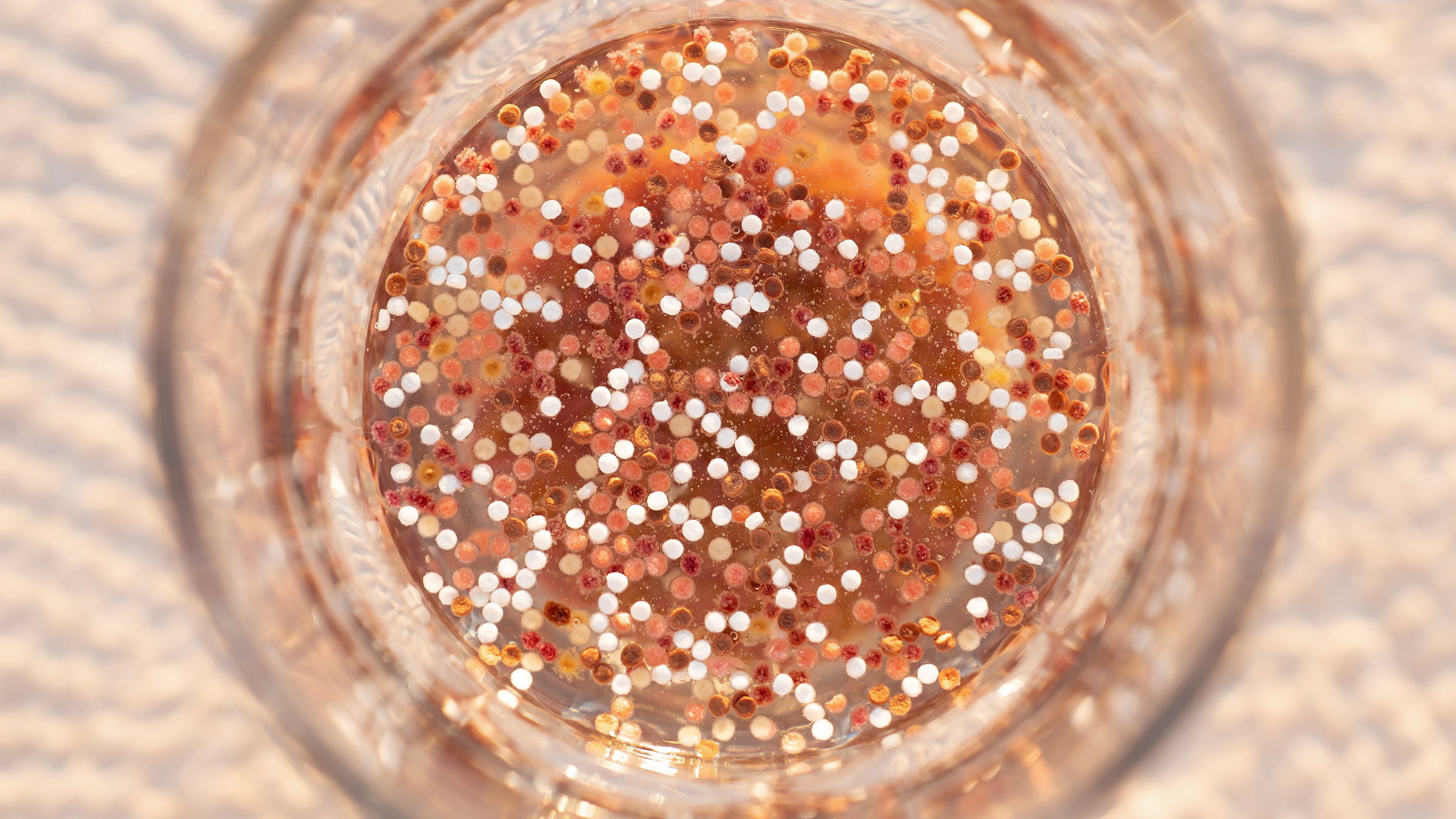
Did you know? Thanks to their special biomatrix, all our natural pearls are rich in natural fibers. These support your gut flora, promote nutrient absorption, and make an important contribution to healthy digestion — and thus also to your longevity. Discover natural pearls now
3. Fasting — cellular cleansing from within
Fasting is far more than just abstaining from food — it is a targeted regeneration phase for your body. During this time, your body switches into repair mode: old, damaged cell components are broken down, and new structures emerge. This process is called autophagy — an essential protective mechanism against premature aging, inflammation, and cell damage.
Autophagy is already stimulated by intermittent fasting (e.g., 16:8) — but studies show that longer fasting periods, such as 48–72 hours, have the strongest effect on cell cleansing. After that, the body's focus shifts from autophagy to profound regeneration and stem cell activation — processes associated with longevity, cell rejuvenation, and improved tissue repair.
Important: Fasting is not a trend, but a biological process — with responsibility. Fasting can trigger profound processes in the body — but caution is advised: not every method is suitable for every person. Longer fasting periods, in particular, should only be undertaken with careful preparation, preferably under professional guidance, and during a stress-free period.
Do you need support with your diet? Our Powerlife Institute in Zug offers individual nutritional counseling — well-founded, personal, and holistically tailored to your goals. Feel free to call us at +41 41 710 66 02 — we will advise you personally and without obligation.
4. Reducing stress — for your nervous system and your cells
Stress is not inherently negative. In the short term, it can even boost performance. It becomes problematic when stress becomes chronic: it raises cortisol levels, accelerates cellular aging, weakens the immune system, and promotes silent inflammation in the body.
What you can do specifically:
- Breathing exercises: Even five minutes of conscious breathing a day can activate the parasympathetic nervous system and lower stress levels.
- Meditation: Regular meditation practice improves psychological resilience and reduces stress symptoms.
- Autogenic training: Through autosuggestive formulas, a state of physical and mental relaxation is achieved.
- Progressive muscle relaxation: Alternating tension and relaxation of individual muscle groups helps to relieve physical and mental tension.
- Yoga: Postures, breath control, and meditative elements promote harmony between body and mind — with positive effects on stress processing and emotional balance.
According to studies, just ten minutes of daily mindfulness can noticeably improve psychological resilience.

5. Sleep — why good sleep is a real regeneration booster
Sleep is not an option, but a prerequisite for healthy longevity. While we sleep, numerous regenerative processes take place: cells renew themselves, the immune system is strengthened, hormones are regulated, and the brain processes the day's impressions.
The release of growth hormones plays a central role, as it supports cell repair. At the same time, restful sleep slows down the shortening of telomeres, which is considered a key mechanism of aging. Mental health also benefits: memory, concentration, and emotional stability improve. In addition, the immune system is strengthened, cortisol levels are regulated, and the body is better protected against chronic inflammation.
Here's how you can improve your sleep:
- Maintain a regular sleep schedule — even on weekends
- Avoid blue light sources like phones, laptops, and TVs in the evening
- Support natural relaxation with magnesium, glycine, or L-theanine
- Ensure darkness, quiet, and fresh air in the bedroom
- Reduce caffeine from the afternoon onwards and choose light meals in the evening
Good to know: According to studies, even single nights of poor sleep can disrupt sugar metabolism and promote inflammation. In the long term, the risk of cardiovascular diseases, depressive moods, and premature aging increases.
6. Your Microbiome — the Secret Key System for a Long Life
Roughly 100 trillion microorganisms live in the gut — a complex ecosystem with an enormous influence on our health. The microbiome not only regulates digestion but also the immune system, mood, metabolism, and even epigenetic processes.
Why is a healthy microbiome so crucial?
- Supports the immune system and protects against inflammation
- Communicates directly with the brain via the gut-brain axis
- Helps regulate body weight
- Improves the absorption of important nutrients
- Influences gene activity through epigenetic mechanisms
How you can strengthen your gut flora
- Integrate fiber-rich foods like flaxseeds, oats, legumes, and vegetables into your daily routine
- Opt for fermented products like sauerkraut, kimchi, unsweetened yogurt, or kefir
- Reduce sugar, alcohol, and highly processed foods
- Avoid unnecessary antibiotics, as they also destroy beneficial bacteria
- Supplement your diet with polyphenol-rich foods like berries, dark chocolate, or green tea
Interesting to know: According to studies, a fiber-rich, Mediterranean diet can significantly improve the health of older people — and reduce overall mortality by up to 50%.
If you want to do even more specifically good for your gut flora, darmglück might be just the thing for you — a micronutrient blend specially tailored for digestion. But all our other natural pearls also contain valuable fibers thanks to their innovative casing, which supports your gut health.
7. Micronutrients — small molecules with a big impact
They are tiny, yet indispensable: micronutrients such as vitamins, minerals, trace elements, and secondary plant compounds play a key role in almost all biological processes of our body. Nothing works without them — no energy production, no cell protection, no repair mechanisms. Especially when it comes to healthy aging and longevity, these small helpers are of great importance.
But not only what we consume, but also how and when is crucial — because bioavailability, synergies, and individual needs determine how effectively micronutrients can actually work.
| Nutrient | Effect | Source |
|---|---|---|
| Vitamin D3 | Low levels increase mortality risk | Pérez-López et al., 2011 |
| Omega-3 fatty acids | Extends average lifespan by 15% | Champigny et al., 2018 |
| Vitamin C | Promotes telomere length | Cai et al., 2023 |
| Vitamin B12 & Folic Acid | Lengthen telomeres & protect mitochondrial DNA | Praveen et al., 2022 |
| EGCG (Green Tea) | Induces autophagy | Holczer et al., 2018 |
| Curcumin | Promotes autophagy & reduces inflammation | Li et al., 2022 |
| Vitamin K2 | Regulates gene expression & fatty acid metabolism | Qu et al., 2022 |
| Zinc | Protects against immunosenescence | Mocchegiani et al., 2010 |
| Selenium | Reduces oxidative stress | Robberecht et al., 2019 |
Conclusion: Your Longevity is in Your Hands
The seven tips in this article show you that longevity is not an abstract promise for the future, but something you can actively shape with concrete, scientifically sound measures. Whether through exercise, nutrition, sleep, or targeted micronutrient intake — every decision counts.
If you would like even more support on your journey or want to specifically boost your longevity, we have something special for you: With our POWERHAIR® PREMIUM-Mix we offer you a customized micronutrient combination that is precisely tailored to you, your body, your lifestyle, and your goals — including our special anti-aging complex.
Thanks to our patented formula, we can combine over 45 high-quality nutrients in a single mixture — in the highest dosage, optimally bioavailable, and precisely tailored to you. This way, we not only cover your basic needs but also specifically support what is important to you: your longevity, your athletic performance, restful sleep, healthy hair, or other individual concerns.
You are not alone. Our experienced experts are here to help and advise you personally — competently, empathetically, and holistically. Together, we will find out what your body truly needs. Feel free to call us at +41 41 710 20 70 or order your individual mixture directly.
Frequently Asked Questions (FAQ)
What is longevity and how can I actively promote it?
Which form of training is most effective for longevity?
Why is the microbiome so important for a long life?
Sources
He C et al. (2012). Exercise-induced BCL2-regulated autophagy is required for muscle glucose homeostasis. PubMed 22892563
Schwalm C et al. (2013). Activation of autophagy in human skeletal muscle is dependent on exercise intensity and AMPK activation. doi.org/10.1096/fj.14-267187
Ottensmeyer et al. (2024). Current Biology — S0960-9822(24)01027-3
Knoops KT et al. (2004). Mediterranean diet, lifestyle factors, and 10-year mortality. JAMA. doi.org/10.1001/jama.292.12.1433
Erlangga et al. (2023). doi.org/10.1016/j.hnm.2023.200189 · Horne BD (2020). Nutrients. doi.org/10.3390/nu12092567
Hopper SI et al. (2019). Effectiveness of diaphragmatic breathing. doi.org/10.11124/jbisrir-2017-003848 · Goyal M et al. (2014). Meditation programs for psychological stress. JAMA. doi.org/10.1001/jamainternmed.2013.13018 · Breznoscakova et al. (2023). doi.org/10.3390/ijerph20054344 · Liu et al. (2020). doi.org/10.1016/j.ctcp.2020.101132 · Pascoe MC et al. (2017). doi.org/10.1016/j.psyneuen.2017.08.008
Irwin MR (2015). Why sleep is important for health. Annual Review of Psychology. doi.org/10.1146/annurev-psych-010213-115205
Kim S & Benayoun BA (2020). PMC7437988 · Thevaranjan N et al. (2017). doi.org/10.1016/j.chom.2017.03.002 · Stilling RM et al. (2016). doi.org/10.1016/j.neuint.2016.06.011 · Pavlicek et al. (2015). Springer — s11428-014-1330-5 · Vasto S et al. (2012). doi.org/10.1186/1742-4933-9-10 · Prud'homme et al. (2022). doi.org/10.3389/fragi.2022.931331
Pérez-López FR et al. (2011). Vitamin D & mortality. PubMed 22019754 · Champigny CM et al. (2018). Omega-3. doi.org/10.3390/md16110453 · Cai H et al. (2023). Vitamin C & telomeres. doi.org/10.3389/fnut.2023.1025936 · Praveen G et al. (2022). B12 & Folic Acid. doi.org/10.1016/bs.vh.2022.01.014 · Holczer M et al. (2018). EGCG & Autophagy. PMC5831959 · Li Y et al. (2022). Curcumin. doi.org/10.1016/j.apsb.2021.12.014 · Qu X et al. (2022). Vitamin K2. doi.org/10.3389/fnut.2022.858481 · Mocchegiani E et al. (2010). Zinc. doi.org/10.1017/s0029665110001862 · Robberecht H et al. (2019). Selenium. doi.org/10.2174/1381612825666190701144709